Home
Products
FAQContact
Mineral Spirit · Standard & Low-Aromatic · ASTM D235

White Spirit — Premium Industrial Solvent
for UAE Industry

High-purity mineral spirit for industrial cleaning, paint thinning, degreasing, and chemical processing. Low-aromatic and standard grades available. Bulk, IBC, and drum delivery across the UAE and export.

Paint Thinning
Industrial Cleaning
Printing Industry
Low-Aromatic Available
Flammable — Flash Point 30–45°C
White Spirit
Product Overview

One of Industry's Most Versatile Solvents

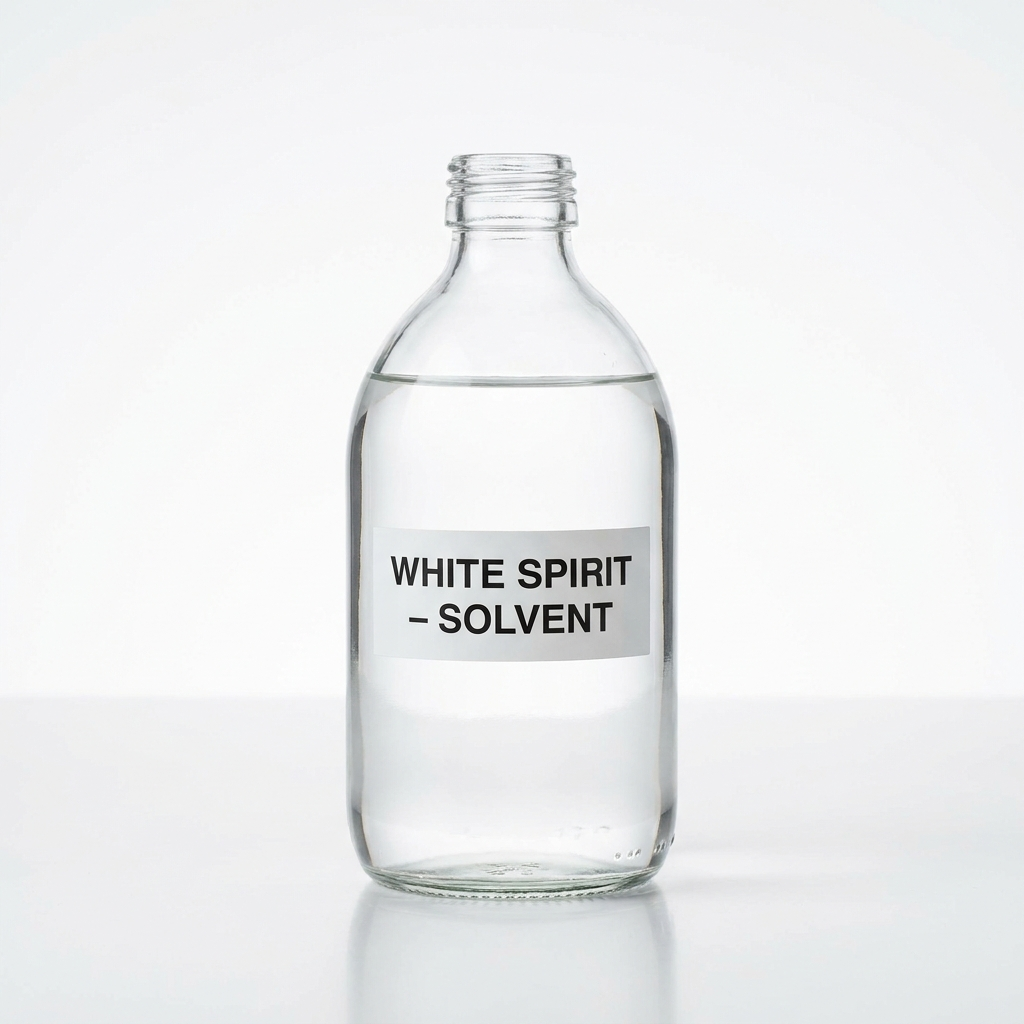
White spirit — also known as mineral spirit, mineral turpentine, Stoddard solvent, or petroleum spirit — is a clear, colorless to pale yellow petroleum-derived solvent with a boiling range of approximately 130–220°C. It sits between lighter solvents like naphtha and heavier products like kerosene in the distillation spectrum.

White spirit's primary advantages: excellent solvency for oils, greases, and organic compounds; relatively lower toxicity compared to aromatic solvents (benzene, toluene, xylene); moderate evaporation rate; and broad compatibility across industrial processes.

Flammable Liquid: Flash point 30–45°C. Must be stored and handled as a flammable liquid per UAE Civil Defence requirements and international transport regulations (ADR/IMDG Class 3). See safety section below.

Grades Available
Standard White Spirit
Aromatics: 15–25% · KB Value: 35–40
General industrial cleaning, paint thinning, degreasing. Most economical.
Low-Aromatic White Spirit
Aromatics: ≤1.0% · Reduced odor & toxicity
Enclosed workspaces, printing inks, consumer products, health-sensitive applications.
Technical Specs

White Spirit Specifications

ParameterStandard GradeLow-Aromatic Grade
AppearanceClear, bright, water-white to pale yellow. Free of suspended matter and visible water.Water-white to colorless. Superior clarity.
Color (Saybolt)≥ +25≥ +28
Density at 15°C760–800 kg/m³
IBP (Initial Boiling Point)~140–160°C
Dry Point (FBP)190–220°C
Flash Point (PMCC)30–45°C (typical ~38°C)~40–45°C (slightly higher)
Aromatics Content15–25% v/v≤1.0% v/v (typically 0.1–0.5%)
Kauri-Butanol (KB) Value35–40 (higher solvent power)30–35 (slightly lower solvency)
Aniline Point55–65°C (lower = more aromatics)65–70°C (higher = lower aromatics)
Sulfur Content≤ 500 ppm≤ 10 ppm (for sensitive applications)
Water Content≤ 100 ppm (essentially dry)
Copper Strip CorrosionClass 1 (non-corrosive)
Doctor TestNegative (no mercaptans/H₂S)
Residue on Evaporation≤ 5 mg/100 ml
Standard ReferenceASTM D235, BS 245, IS 1745 or as agreed

* Low-aromatic grades are commonly referred to as D40, D60, Exxsol, Shellsol, or similar trade names. When inquiring, please specify required aromatics content and boiling range.

White Spirit application
Applications

What Is White Spirit Used For?

Paint & Coatings

Solvent for alkyd/oil-based paints, varnishes, enamels. Paint thinner and brush cleaner. Viscosity adjustment for spray application. Equipment cleaning (spray guns, brushes, rollers).

Industrial Cleaning & Degreasing

Removal of oils, greases, waxes from metal parts. Pre-treatment before painting/plating/welding. Machinery maintenance cleaning. Parts washer solvent (approved equipment).

Printing Industry

Solvent in lithographic and letterpress inks. Blanket wash and roller wash. Cleaning printing plates and equipment. Low-aromatic grades preferred for worker health in this application.

Metalworking

Component of metalworking fluids and cutting oils. Cleaning and degreasing before/after machining. Rust preventive carrier. Pre-treatment cleaning before surface treatment.

Chemical Manufacturing

Solvent in adhesives, sealants, polishes, waxes, wood treatments, pesticides, specialty chemicals. Extraction solvent. Carrier fluid in chemical formulations.

Automotive Workshops

Engine degreaser. Tar and adhesive remover for bodywork. Brake and parts cleaner component. Cleaning solvent in vehicle maintenance. Workshop cleaning and degreasing.

Safety & Handling

White Spirit Safety — Critical Information

FLAMMABLE LIQUID — Flash Point 30–45°C

White spirit is a Class 3 flammable liquid. Vapors are heavier than air and can accumulate in low areas to form explosive concentrations. All ignition sources must be eliminated in storage, handling, and use areas.

Storage Requirements
  • Approved flammable liquid containers/tanks in cool, dry, well-ventilated area
  • Away from ignition sources: flames, sparks, hot surfaces, static electricity
  • Grounding and bonding during transfer to prevent static discharge
  • Spill containment (bund wall or spill pallets). Class B fire extinguishers accessible
PPE & Handling
  • Chemical-resistant gloves (nitrile, PVA), safety goggles
  • For prolonged/high-exposure: organic vapor respirator
  • Use in well-ventilated areas. Local exhaust ventilation for enclosed spaces
  • No smoking, eating, or drinking in handling areas. Wash hands thoroughly after use

Safety Data Sheet (SDS) provided with every delivery. Dangerous goods documentation (UN 1300, Class 3, PG III) supplied for transport as required.

Delivery

White Spirit Delivery Options

MethodDetails
Bulk Tanker2,000–12,000 IG per delivery. Dedicated compartments with flame arrestors and electrical bonding per flammable liquid regulations. Standard for large consumers. Most economical per litre.
IBC Containers1,000-litre UN-approved Intermediate Bulk Containers for flammable liquids. Convenient for medium consumers. Returnables or one-way.
Steel Drums205-litre (55 US gallon) UN-approved steel drums with appropriate closures and hazard labels. Palletized — 4 drums per standard pallet.
ExportBulk vessel, ISO tank containers (UN-approved for flammable liquids). Full export documentation: COA, SDS, dangerous goods declaration, country-of-origin certificate.

All white spirit deliveries include: Safety Data Sheet (SDS), delivery note, COA upon request, and appropriate UN labeling (UN 1300, Class 3) per UAE and international regulations.

FAQ

Common Questions

Is white spirit the same as paint thinner?
"Paint thinner" is a generic term that can refer to white spirit, mineral spirit, turpentine (vegetable-derived), or blends of various solvents. In most industrial contexts, white spirit IS the paint thinner. However, if your application requires a specific formulation, please specify — we'll match the correct solvent.
Is white spirit the same as kerosene?
No. White spirit is lighter (boiling range ~140–220°C vs. ~150–300°C for kerosene), has a lower flash point, and is formulated primarily as a solvent rather than a fuel. They are NOT interchangeable — using the wrong product can cause inadequate solvency, excessive residue, different evaporation rates, odor issues, and safety hazards.
What's the difference between "low-aromatic" and "standard" white spirit?
Aromatics (benzene, toluene, xylene, etc.) are hydrocarbon ring compounds that provide good solvency but are associated with higher toxicity, stronger odor, and higher VOC impact. Low-aromatic white spirit has had most aromatics removed (typically to ≤1%), resulting in lower odor, lower toxicity, better environmental profile — but slightly reduced solvent power (lower KB value). Low-aromatic grades are increasingly specified for health and safety reasons, particularly in enclosed workspaces.
What documents do you provide with white spirit?
Safety Data Sheet (SDS) — provided with first delivery and updated as required. Delivery note. Certificate of Analysis (COA) — upon request. Dangerous goods declaration for transport. All documents available in English; other languages on request.
Can I use white spirit as a fuel?
White spirit is NOT formulated or sold as fuel. It is a solvent product. For fuel applications, use the fuel specified by your equipment manufacturer (kerosene, diesel, etc.). Using white spirit as fuel in undesignated equipment is unsafe and not recommended.
Order White Spirit — Standard or Low-Aromatic

Tell us your application, required grade, and monthly volume. We'll recommend the optimal product and provide a competitive quote.