Home
Products
FAQContact
60/70 · 40/50 · 85/100 · VG30 · VG40 · PMB

Bitumen — The Foundation of Infrastructure

Penetration grades 40/50, 60/70, 85/100 and viscosity grades VG30, VG40 for road construction, airport runways, waterproofing, and industrial applications. Bulk and packaged supply from Dubai — domestic delivery and international export.

Road Construction
Airport Runways
Waterproofing
Export via Dubai
PMB Available
Bitumen All Grades
Product Overview

More Than a Road Material — An Engineering Solution

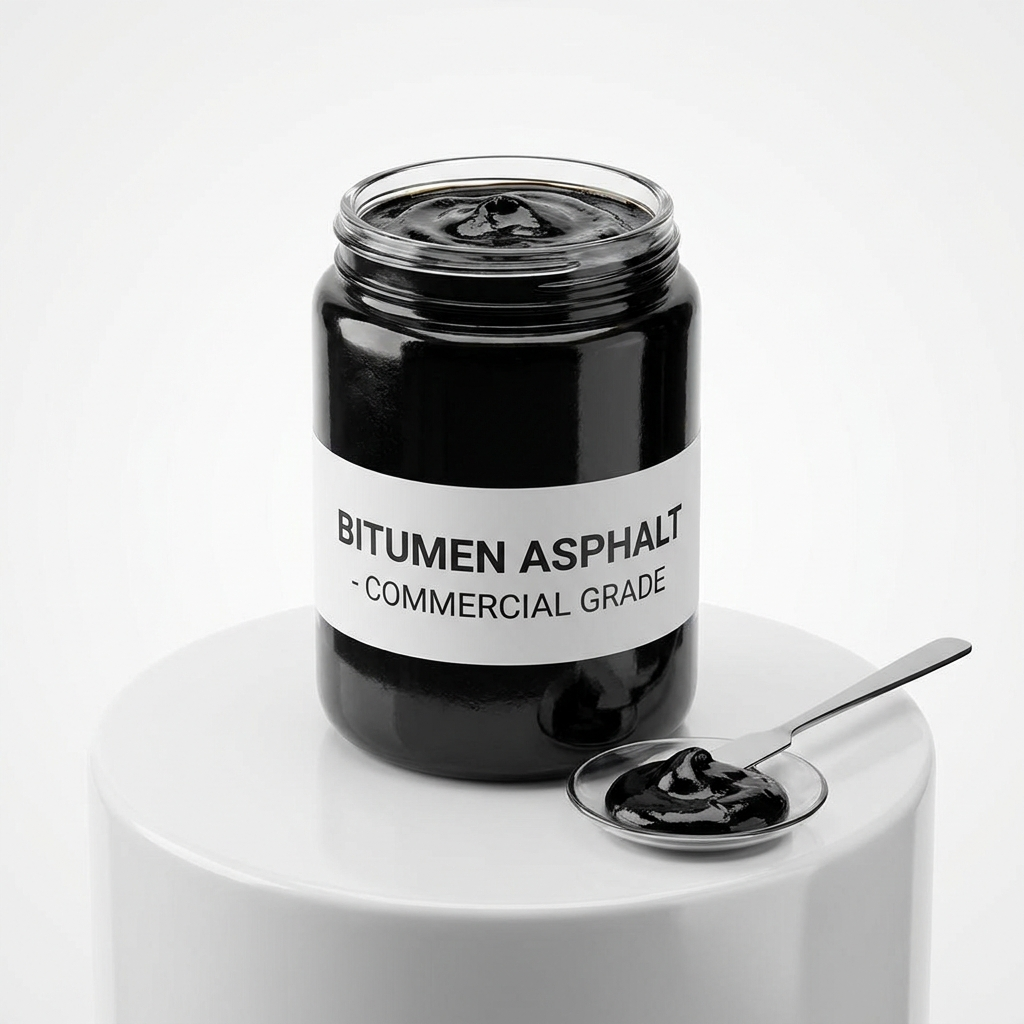
Bitumen is the heaviest, most viscous product of crude oil refining — a black, sticky, semi-solid material used for thousands of years as a waterproofing agent and, in modern times, the essential binder in asphalt concrete. It is what holds stone, sand, and gravel together to form the pavement that carries the world's traffic.

Despite being a petroleum product, bitumen's dominant characteristic is not its energy content but its remarkable physical properties: waterproof, adhesive, thermoplastic, durable, and — critically — recyclable. Asphalt pavement is one of the world's most recycled materials.

Hibernia General Trading L.L.C. — our parent company — has been actively trading bitumen since incorporation, with expertise across all standard penetration and viscosity grades for both domestic UAE supply and international export markets.
Grades Available
60/70Most common · UAE standard
40/50Hard · heavy traffic · hot climates
85/100Soft · waterproofing · light roads
VG30Viscosity grade · equiv. 60/70
VG40Hard · expressways · airports
PMB / SBSOn request · high-performance
Penetration Grades

Understanding Penetration Grading

The penetration grade (e.g., 60/70) indicates the depth in tenths of a millimeter that a standard needle penetrates the sample at 25°C under 100g for 5 seconds. Lower number = harder bitumen (hot climates, heavy traffic). Higher number = softer bitumen (cooler climates, lighter traffic).

GradeCharacteristics & Typical ApplicationsUAE Context
40/50Hardest common paving grade. Excellent for very hot climates — maximum resistance to rutting under heavy traffic in extreme heat. Used for: major highways, airport runways, container terminals, industrial pavements. Lower temperature susceptibility — more resistant to summer softening.Specified for UAE expressways and heavy-duty pavements
60/70Most common paving grade globally and in the Middle East. Balanced performance across a wide range of climates and traffic conditions. Used for: highways, urban roads, rural roads, commercial parking, general asphalt concrete. Most commonly stocked — typically available for prompt delivery.Standard UAE road construction grade. Most widely available.
85/100Softer grade for lighter-duty applications. Low-traffic roads, residential streets, parking areas, footpaths, cycling paths. Also used in waterproofing applications: bitumen membranes, coatings, dampproofing, roofing. Easier to work with at lower temperatures.Residential areas, waterproofing projects
100/120Soft grade — primarily for waterproofing, damp-proofing, industrial coatings. Cold climate road construction. Some emulsion and cutback bitumen production.Specialist supply — on request
120/150Extra soft — industrial, not road paving. Waterproofing and sealing compounds, pipe coating, corrosion protection, adhesive formulations.On request
Viscosity Grades

VG System — Performance-Based Grading

Viscosity grading is based on absolute viscosity at 60°C (in poise). This system is widely used in India (IS 73) and increasingly in the Middle East. The VG system correlates better with field performance than penetration grading alone.

GradeCharacteristics & ApplicationsEquivalent
VG10Softest viscosity grade. Cold climates, low-traffic roads, spraying applications (surface dressing, chip seal). Rarely used in the Gulf except for specific spray-seal applications.≈ 80/100
VG20Medium viscosity — not commonly specified in the UAE. Contact us for availability.≈ 60/70–80/100
VG30Most common VG grade for road construction in hot climates including Middle East, India, and Africa. Highways, urban roads, heavy traffic, high-temperature regions. Better rutting resistance at high temperatures compared to VG10. Default VG grade for UAE projects specifying the viscosity system.≈ 60/70
VG40Hardest viscosity grade. Extreme heat, extreme traffic loads, heavily stressed pavements. Expressways with heavy trucks, intersections, bus lanes, container terminals, airport taxiways and aprons, industrial pavements. Maximum resistance to rutting and deformation.≈ 40/50
Specialty Types

Other Bitumen Products Available

Polymer-Modified Bitumen (PMB / SBS)

Bitumen modified with SBS polymers for enhanced elasticity, wider temperature range, improved fatigue resistance, and better rutting/cracking resistance. Used for airports, Formula 1 circuits, heavy-duty highways, bridge decks. Available on request — contact us with your performance grade (PG) specification.

Cutback Bitumen (RC / MC / SC)

Bitumen blended with petroleum solvents to reduce viscosity for ambient-temperature application. Rapid-curing (RC), medium-curing (MC), slow-curing (SC). Used for prime coat, tack coat, surface dressing, and cold-mix asphalt. Available on request.

Bitumen Emulsion

Bitumen dispersed in water using emulsifying agents. Applied at ambient temperature — the water evaporates leaving a bitumen film. Used for tack coats, chip seals, slurry seals, microsurfacing, cold-mix asphalt. We supply base bitumen for emulsion production — contact us.

Oxidized Bitumen (Blown Bitumen)

Air-blown bitumen with higher softening point, lower temperature susceptibility. Used for industrial applications: roofing felt, pipe coating, joint sealants, electrical cable fill, waterproofing membranes. Grades: 85/25, 90/25, 115/15, etc. Available on request.

Technical Specs

Key Bitumen Specification Parameters

We supply bitumen conforming to ASTM D946, AASHTO M20, EN 12591, or IS 73 as specified by the buyer.

ParameterWhat It Means & Typical Values
Penetration (25°C, 100g, 5 sec)Hardness/consistency. Primary grade classification. 40–50 dmm (hard) to 120–150 dmm (soft).
Softening Point (Ring & Ball)Temperature at which bitumen flows. Higher = better for hot climates. Typical 45–55°C for paving grades; harder grades (40/50) up to 55°C+.
Ductility (25°C)Ability to stretch without breaking — important for flexibility. Typically ≥100 cm for paving grades.
Viscosity (Absolute at 60°C; Kinematic at 135°C)Defines VG grades. Determines mixing and compaction temperatures for asphalt mix design.
Flash Point (Cleveland Open Cup)Fire safety during handling and heating. Minimum typically 230–250°C for paving grades.
Solubility in TCEPurity — indicates bitumen content vs. inert mineral matter. Typically ≥99% for paving grades.
Loss on Heating (RTFOT / TFOT)Resistance to aging during hot mixing. Important predictor of long-term pavement durability.
Specific Gravity at 25°CDensity — typically 1.00–1.05 for paving grades. Used for volume-to-mass conversion in mix design.
Bitumen All Grades
Applications

What Is Bitumen Used For?

Road Construction

The primary application — bitumen binds aggregates in asphalt concrete. Typically 4–6% bitumen by weight. Heated to 150–175°C, mixed with hot aggregates, laid and compacted. Result: strong, waterproof, flexible pavement.

Airports & Ports

Airport runways, taxiways, aprons. Container terminal pavements (extreme static/dynamic loads). Typically high-spec polymer-modified bitumen (PMB) specified.

Waterproofing

Roofing felt and membranes, basement and foundation waterproofing, tunnel waterproofing, reservoir and canal lining, damp-proof courses. Typically softer grades (85/100+) or oxidized grades.

Bridges & Infrastructure

Bridge deck waterproofing and surfacing. Industrial yard surfacing, service station forecourts, racing circuits (highly engineered PMB). Car parks, footpaths, cycle paths.

Industrial Uses

Pipe coating (corrosion protection for buried pipelines), tank and vessel lining, electrical cable filling compound, battery sealing compound, acoustic and vibration damping materials.

Asphalt Plants

Asphalt plant operators require consistent, reliably specified bitumen delivered at the right temperature. We supply directly to UAE asphalt plants with heated road tankers and consistent grade quality.

Packaging & Delivery

How We Deliver Bitumen

MethodDetails
Bulk VesselFull cargo lots (typically 500–5,000+ MT). Shipment in dedicated bitumen tankers with heated cargo tanks. Common for import into UAE and large export shipments.
Bulk Road Tanker20–30 MT per tanker. Insulated and heated for direct delivery to asphalt plants within the UAE. Typical delivery temperature 150–170°C. Requires heated storage tanks at receiving facility.
New Steel Drums150–180 kg per drum. 110–120 drums per 20-ft container (approximately 18–21 MT net). Standard for international trade and locations without heated storage. Bitumen solidifies in drums — drum decanters required for use.
Jumbo Bags / Big Bags (FIBCs)1 MT polypropylene bags with inner liners. 20 bags per 20-ft container (20 MT). Easier handling than drums. Crane or forklift required.
Poly Bags / Cartons30–50 kg bags for small-scale consumption. Contact us for availability.
FAQ

Common Questions

Which grade should I use for road construction in the UAE?
Penetration grade 60/70 is the standard for most UAE road construction and matches typical specifications from UAE authorities. For heavily trafficked highways, container terminals, or extreme heat conditions, 40/50 offers additional rutting resistance. If your specification calls for the viscosity system, VG30 is equivalent to 60/70. Always follow your project specification — our team can help you match the right grade.
Can you supply polymer-modified bitumen (PMB)?
Yes. PMB is available on request with the specific polymer type (typically SBS) and performance grade (PG) to match your project requirements. Lead times may be longer than standard grades. Contact us with your PMB specification.
How much bitumen do I need for a road project?
A rough estimate: 1 km of standard two-lane highway (7.3 m wide) with 50 mm asphalt layer requires approximately 80–100 MT of bitumen (assuming 5% bitumen content in the mix and 2.35 tonnes/m³ compacted density). Exact quantities depend on pavement design, number of layers, and thickness. We can connect you with pavement engineers for detailed estimates.
How is bitumen priced?
Bitumen is typically priced in USD per metric tonne (MT). Pricing is influenced by crude oil prices, regional supply-demand balance, seasonal construction demand, freight costs, and specific grade/packaging. We provide spot quotes and long-term contract pricing. Contact our trading desk.
What's the minimum order quantity?
Bulk road tanker: 20 MT (approximately one tanker load). Drums/jumbo bags: 20 MT (one 20-ft container). Smaller quantities may be possible — contact us with your requirements.

Get the Right Bitumen for Your Project

Tell us your required grade, packaging preference, monthly volume or project total, and destination. We'll provide a competitive quotation within one business day.